Architectural Reverberation & Historic Stages

Inside the listening room

Acoustic Precision in Northern Architecture

While festivals showcase community energy, the year-round musical integrity of Denmark, Sweden, Norway, and Finland resides inside specially engineered listening environments. Nordic architecture approaches concert hall construction with a balance of democratic sightlines and mathematical acoustic calibration. Instead of gold-leaf proscenium arches, these spaces use curved birch wood, basalt-inspired surfaces, and asymmetric terraced seating that bring every listener close to the performance.

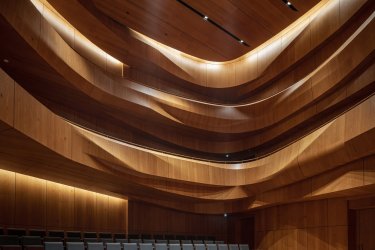
Interior timber walls of Jean Nouvel concert auditorium in Copenhagen
Copenhagen • Symphonic

DR Koncerthuset (Studio 1)

Designed by French architect Jean Nouvel with acoustic engineering by Yasuhisa Toyota, Studio 1 features a vineyard layout where 1,800 seats envelop the stage like terraced hills. Its undulating timber panels reflect warm lower-mid frequencies cleanly.
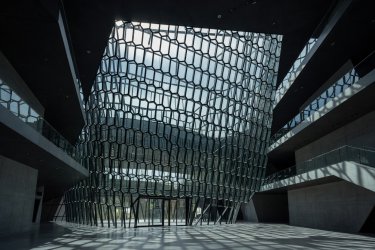

Dramatic geometric glass facade and geometric hall interior of Harpa in Reykjavik
Reykjavík • Basalt & Glass

Harpa (Eldborg Hall)

Rising like a crystalline volcanic formation over Reykjavik’s Old Harbour, Harpa was designed by Henning Larsen Architects and artist Olafur Eliasson. Eldborg, the main hall, is trimmed in deep ruby red acoustic felt with motorized sound-dampening banners.

The angled marble roof slopes of Oslo Opera House descending into the fjord waters
Oslo • Marble & Oak

Norwegian National Opera

Designed by Snøhetta in Oslo’s Bjørvika harbour, this marble-clad civic landmark features a horseshoe-shaped horseshoe auditorium lined in dark oak treated with ammonia, which gives the hall a warm, controlled decay ideal for symphonic precision.

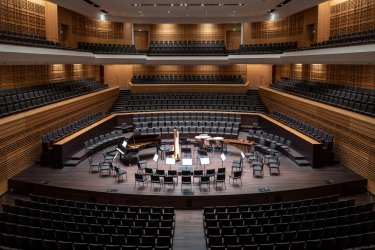
Central stage surrounded by terraced seats in Helsinki Music Centre auditorium
Helsinki • Pure Resonant Pine

Helsinki Music Centre (Musiikkitalo)

Positioned opposite the Finnish Parliament, Musiikkitalo serves as the shared home of the Helsinki Philharmonic and the Finnish Radio Symphony. Its central concert hall employs oiled birch, blackened brass, and floating acoustic canopies.

Storied Clubs and Grassroots Basements

The vitality of Nordic sound does not live solely in pristine symphonic chambers. A rich ecosystem of club rooms, worker-union halls, and artist cooperatives provides the creative foundation where bands cut their teeth long before playing festival main stages.

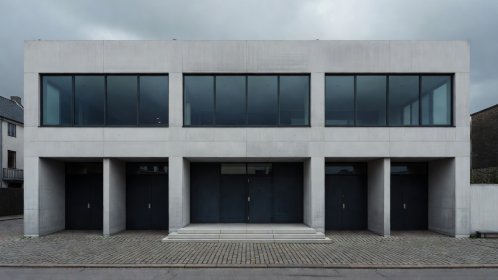
Modernist facade of Vega music venue in Vesterbro Copenhagen
Modernist Heritage • Copenhagen

Vega (Store VEGA & Lille VEGA)

Originally opened in 1956 as Folkets Hus (The People's House) by master modernist architect Vilhelm Lauritzen, this Vesterbro monument is protected by Danish architectural heritage orders. It features dark mahogany panelling, custom brass chandeliers, and curved friezes that produce an exceptionally rich live sound.

Both Store Vega (1,500 capacity) and Lille Vega (500 capacity) are universally celebrated by touring international bands for their backstage hospitality and pitch-perfect acoustics.

Rock History • Helsinki

Tavastia Klubi

Operating continuously since 1970 in Helsinki’s Kamppi quarter, Tavastia is among the oldest preserved rock venues in Europe. Its sloping wooden auditorium floor gives all 700 attendees unobstructed sightlines to the low-slung stage.

Generations of legendary Finnish rock, punk, and metal exports—from Hanoi Rocks to Nightwish and HIM—established their stagecraft within Tavastia’s beer-soaked pine walls.

Historic neon sign of Tavastia Klubi outside Kamppi street corner

Acoustic Data Reference: Technical specs on hall volumes and reverberation metrics cross-checked against reports by Nagata Acoustics and the Danish Ministry of Culture Heritage Register.